

It’s 2025, and business owners are more skeptical than ever about the value of a website. And honestly? I don’t blame them. But if there’s one thing I’ve learned over the years it’s why your business needs a website more than ever before.
Why? Because while social media platforms, algorithm updates, AI breakthroughs—and yes, even Donald Trump—make running a business feel like a never-ending nightmare, your website is the one thing you can fully control.
Every day, there’s more noise, more distractions, and yet another “shiny object” promising quick wins and easier ways to get noticed online. But here’s the truth: third-party platforms, “get-rich-quick” strategies, and even world leaders are anything but stable. Algorithms change overnight, attention spans are shorter than ever, and what might succeed today could completely collapse by tomorrow.
So, what can you do to survive—and even thrive—despite all the chaos and unpredictability?
You guessed it! The answer lies in focusing on the one thing you can fully control: your website. It’s where you set the rules, control your story, and create a lasting space that actually works for your business.
“Your website is the one space where you own the narrative, control the experience, and build a sustainable, lasting online business.”
In this article, I’ll walk you through why websites remain essential for success in 2025—and, to keep it real, when they might not be the right strategy for you.
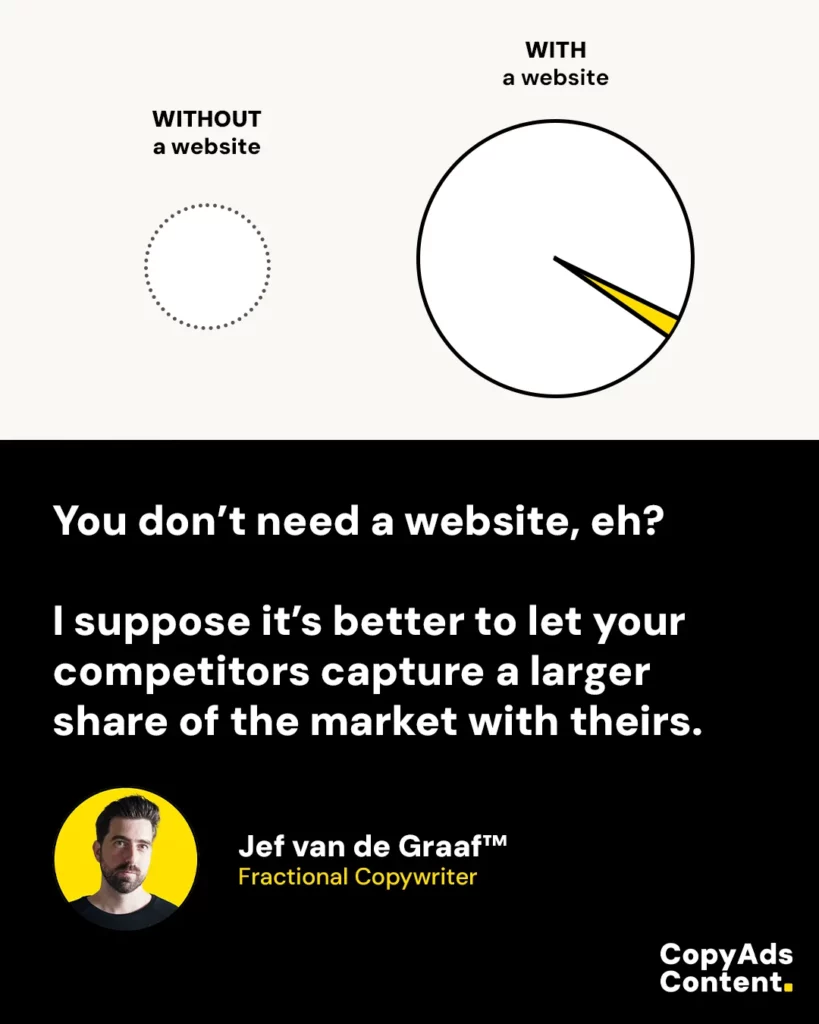
Why Investing in a Website is Essential in 2025
For service-based businesses, the sales process is rarely an impulse purchase. Unlike products that can be added to carts and bought instantly, professional services—like my website marketing solutions—require careful consideration.
But how do you guide potential buyers through these longer, more complex purchasing pathways?
The quick answer? You need an online presence that’s trustworthy, transparent, and credible in order to help potential buyers make decisions easier and faster for buyers to decide with confidence.
To put this into perspective, let’s look at Gartner’s research on the modern B2B buying journey:
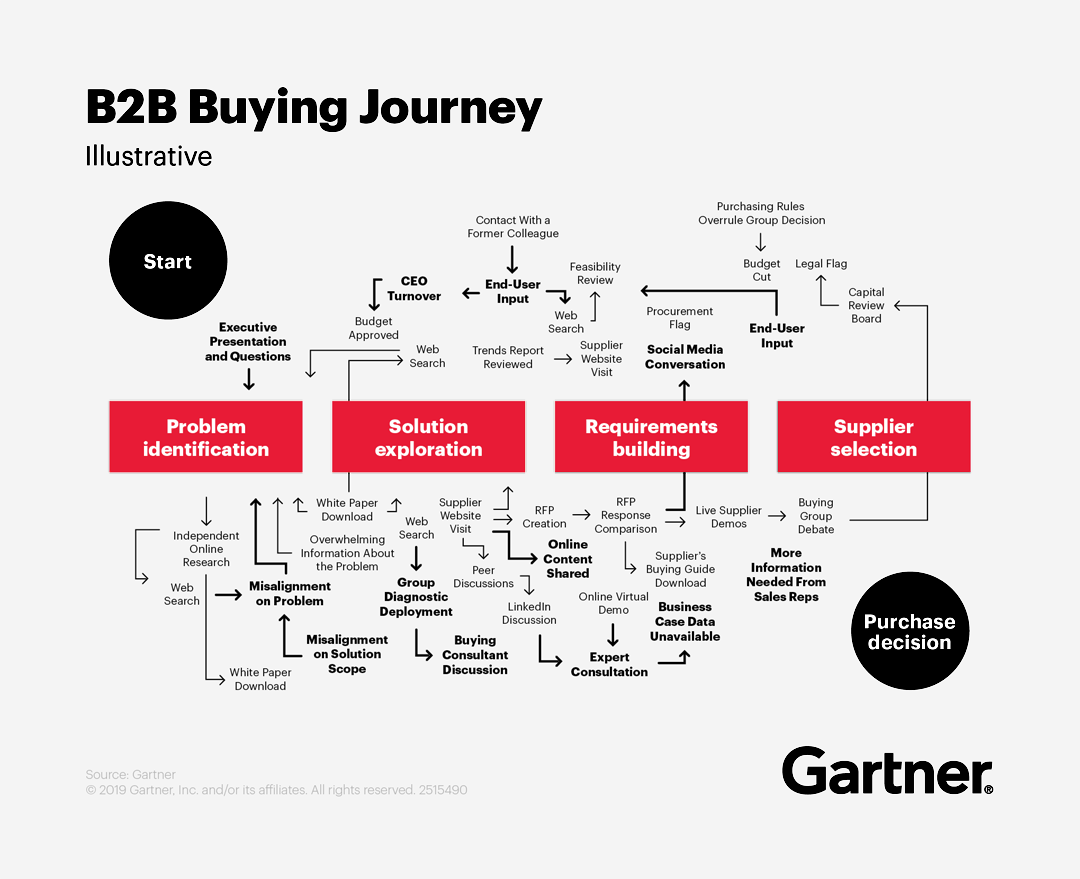
According to Gartner, buyers today face a more difficult decision-making process than ever before. They’ve also identified six key jobs before they can confidently make a purchase:
- Problem Identification – “We need to do something.
- ”Solution Exploration – “What’s out there to solve our problem?
- ”Requirements Building – “What exactly do we need the purchase to do?
- ”Supplier Selection – “Does this do what we want it to do?
- ”Validation – “We think we know the right answer, but we need to be sure.”
- Consensus Creation – “We need to get everyone on board.”
Unlike the traditional linear sales funnel, today’s buying journey is nonlinear. Buyers are always looping back and revisiting each of these six steps, in no particular order, before reaching a final decision. It’s no wonder 77% of buyers describe their last purchase as “very complex or difficult.”
Why Your Website Matters More Than Ever Before
Here’s the most striking part of Gartner’s findings: buyers spend only 17% of their total purchasing time meeting with potential suppliers. When they’re evaluating multiple vendors, any one supplier might get just 5-6% of their time. That means most of their research and decision-making happens independently—through online resources, peer reviews, and your website.
This is exactly why your website matters. It can tip the scales in your favor by being a consistent, accessible touchpoint that allows buyers to:
- Explore solutions at their own pace without the pressure of a sales call.
- Validate their decisions with testimonials, case studies, and other trust-building content.
- Navigate complex decisions more easily by providing clear, helpful, and relevant information tailored to their needs.
This shift in how buyers make decisions highlights one undeniable fact: if your website isn’t helping buyers navigate this complex journey, you’re losing opportunities.
Buyers expect your website to do more than just exist—they want it to guide them, answer their questions, and build the confidence they need to move forward.
How Your Website Guides Buyers to the Finish Line
Even as buyer behaviors evolve, one thing remains constant: your website is a key influencer in guiding purchasing decisions. Research from RainToday (2009) and more recent studies show that:
- 97% of buyers say a service provider’s website influences their purchasing decision to some degree.
- 74% of buyers say a well-designed website holds at least “some influence” over their ultimate decision to work with a provider.
- Buyers value clarity and relevance over flashy sales pitches—57% criticize websites for being too sales-oriented, while 49% praise websites that are informative and useful.
Here’s why this matters: Your website is often your first—and sometimes only—chance to make a strong impression on potential clients.
Buyers aren’t just skimming for a phone number—they’re evaluating your professionalism, expertise, and ability to deliver results.
Whether it’s educating potential clients, establishing credibility, or helping buyers make sense of a complex decision, your website isn’t just a box to check—it’s a critical part of your business strategy.
Whether it’s educating clients, establishing credibility, or simplifying complex decisions, your website is more than a checkbox—it’s the foundation of your business’s success.
Three More Reasons Not to Wait
Start Ranking in Google—Now, Not Later
In 2025, having a website is the bare minimum for any business that wants to be found online. Search engine optimization (SEO) isn’t a quick fix—it takes time.
The sooner you get your website live, the faster you can start climbing the ranks of Google and other search engines.
Delaying this is like waiting for a chance to grab a seat at a crowded bar—you’re not going to get noticed unless you’re already in the game. The quicker you launch, the sooner you can start pulling in free inbound leads from people actively searching for what you offer.
You Have a 24/7 Sales and Marketing Machine
We never know when, where, or why somebody will need our services. That’s the benefit of having a website for your business: it doesn’t sleep. It’s working for you 24/7, even when you’re offline or out living your life.
- A Roof Floods in the Middle of the Night
A business owner discovers a roof leak at 3 AM during a storm. They visit your roofing company’s website, book an emergency service, and get the help they need while you’re sleeping. - A CMO Asks Their Employee to Find a Better Way to Manage Their Contacts
A manager asks an employee to find a solution for managing contacts. The employee comes across your CRM service website, shares the details with their boss, and soon you’re on a call with the company to provide your solution. - A Manufacturer Needs to Optimize Their Supply Chain
A manufacturer realizes their supply chain is inefficient and seeks a consultant. They find your website and book a consultation to learn how your services can streamline their operations.
Whether it’s the middle of the night or the weekend, your website is ensuring that your business is constantly visible, generating leads, and making the process of connecting with your services seamless and efficient.
Your Digital Business Card
Your website is your online business card—except it’s way better. A website allows you to showcase your services, products, and portfolio in a way that a business card simply can’t.
Think about it: a business card has limited space, but your website? It’s unlimited. You can add testimonials, case studies, blogs, and anything else that speaks to your expertise and builds credibility.
And it’s there for anyone to find, anytime they need you.
Do I Really Need a Website for My Business?
I started my first business in Japan. And guess what? I didn’t have a website.
So, why didn’t I have a website for my business? Honestly, I wasn’t very tech-savvy back then. I was also frugal as hell, saving every Japanese yen I could to pay off my student debt.
Did I want a website? Damn right, I did. I just didn’t have the skills to build one (yet).
At the time, I was young, overly confident, and full of optimism. To survive, I relied on word-of-mouth, face-to-face interactions, guerrilla marketing tactics, and a little bit of hustle to get by.
Within a year, I was bringing in $5K to $6K a month, working just 12 hours a week.

Sure, I had a solid system in place, but all the while, I wished I had a website.
Not because I thought it would magically solve everything, but because it would have given me the online presence I needed to show I wasn’t just some random guy trying to make a quick buck, but someone serious about serving my community.
I also believed my business needed a website because:
- It would give prospects a place to get to know me – A website would’ve been the perfect spot for potential students to understand what I offer and who I am, without having to meet me face-to-face first.
- I could present myself in both English and Japanese – Since I was still learning Japanese, a website would’ve helped me communicate more clearly and professionally in both languages.
- It would make referring me easier – My students could’ve easily shared my site with their friends and family, cutting down on friction and making referrals a no-brainer.
- It would show I’m serious about my business – Without a website, I felt like I was just hustling on the streets. A website would’ve shown that I was building something real and sustainable.
- It would give me control over how I’m seen online – Without a site, I was at the mercy of random social media posts. A website would’ve let me take control of my brand and messaging.
Looking back, I can say with certainty that having a website would have taken my business to the next level—faster, more professionally, and with more trust from potential students.
So does every business need one? Not quite. Here’s when you can skip it.
When a Website is NOT Right for Your Business
Not all businesses need a website. There, I said it. Even though I hope you’ll consider working with me to build a website for your business, I’m not going to bullsh*t you into buying something that won’t deliver results or give you a real ROI.
The truth is, for some businesses, a website might not be the right move—at least not right now.
For example:
- Your business thrives entirely on word-of-mouth: If your clients come exclusively from trusted referrals and you’re consistently booked out, a website may not add significant value to your pipeline.
- You’re not ready to commit to maintaining it: A website requires updates, optimization, and fresh content to stay relevant. If you’re unwilling or unable to commit to its upkeep, it might not be worth the investment.
- You don’t want to compete in search: If ranking on Google isn’t part of your strategy and you’re not interested in leveraging SEO, a website may not provide significant returns for your business.
- You’re operating on an ultra-low budget: A poorly built, low-budget website can harm your reputation more than help it. If you’re not ready to invest in quality, it’s better to hold off until you are.
- Your industry doesn’t require it: Some industries—like hyper-local trades with small client bases—may not need the reach or visibility that a website provides, especially if their clients are long-term or recurring.
Some of these examples are hypothetical, while others are based on real conversations I’ve had with business owners who’ve chosen not to use a website. And that’s fine—I respect their decision.
But for many businesses, a website isn’t just a nice-to-have—it’s a necessity.
Now, I know the decision to invest in a website isn’t always an easy one. As a business owner, you’ve probably asked yourself:
- “Do I even need a website?” You’ve gotten by without one so far, relying on word-of-mouth, social media, or other strategies to keep your business afloat.
- “Is my website even working?” You spent time—or money—on a DIY website, but it hasn’t brought in leads, built trust, or made any measurable impact on your bottom line.
So let me share some unsolicited truth: a website isn’t just an expense—when built right, it’s an investment that solves real business challenges and delivers tangible ROI.
Why My Done-For-You Website Design Delivers Real ROI
My web design process is the culmination of 8+ years of online marketing experience. I’ve worked with B2B companies that spend thousands—sometimes millions—on perfecting their online presence. I know what works, and more importantly, I know how to get results.
When you work with me, you’re not just getting a website—you’re getting a Done-For-You (DFY) web design solution built with strategy and purpose.
Here’s what I provide in every DFY web design project:
- SEO-friendly + conversion-focused copywriting: With my background as a copywriter, I create website content that reflects your brand, connects with your audience, and ranks on Google. And yes, I use AI (ChatGPT) to help keep costs affordable for you.
- Smart, functional web design: Your site will look polished, load fast, and guide visitors seamlessly toward action.
- Conversion-focused funnels: Every page is strategically designed to direct visitors—whether it’s booking a call, filling out a form, or reaching out to your business.
- Premium hosting (1 year included): Your site will run on high-performance, fast-loading hosting without the headaches of managing backend tools like cPanel. You will have nothing to worry about as I handle everything so you don’t have to.
What will your website do for you?
If my DFY web design sounds like the right fit for your business, let’s make it happen. Fill out my intake form here to get started today.
Not quite ready? That’s okay too. Follow me on LinkedIn for weekly insights, actionable tips, and free resources to help you build a successful online business—on your terms.