
You might think launching a website in 2026 should be just $0, right? All you have to do is ask AI and voila, you gonna be rich af!
If that’s what you truly believe, please click here and leave my website. Bye, babe!
Otherwise, don’t click that link and keep reading because in this article I’m going to teach you:
You can either click those links above to skip to what matters to you, or grab a coffee and dig in. I’ve got a lot of good things to tell you about one page websites.
Ready? Let’s begin.
1. When to question a $10K quote for a web design project
If you think $10K is expensive for a website, you’re either:
Poor af;
Not serious about making money online; or…
Serious, but not making enough money—either online or offline—to justify bringing in a 3rd party web expert (like me) to help.
I can’t think of any other scenario, can you?
And, I know, I sound like an a**hole here. But the truth is, a website built right should deliver a 2X to 10X+ return on your investment within the first year—or sooner.
I say first year because you have to account for SEO. That takes time to kick in. But if you hire the right person, a $10K website today should be delivering hot leads and direct sales from search within 2 to 6 months.
If not, you got scammed.
Ah, I hate that, because you’re probably a genuine person with a legitimate business that deserves to succeed online.
Let me help you ask the right questions if you’re considering other people to build an asset that ought to help you succeed online. By succeed, I mean, actually making you money. Truly,I think there’s no other definition of success when it comes to a website, no?
Well, before you spend $10K—or whatever $K—on a website, you might want to ask the agency or web designer in question the following:
"What specific conversion mechanism(s) are you building into our website to ensure this pays for itself in 6 months?"
If they start talking about "brand identity," "aesthetic alignment," or "modern layouts" instead of funnel logic, lead capture, and copy hierarchy, they're designers, not growth strategists.
"Can you show me a client site in a similar niche (or not) that is actively generating organic traffic and leads from the page structure you're proposing?"
Force them to produce receipts, not just pretty portfolio screenshots. Then again, my first web design client trusted me because I had the tenacity to help them succeed. They challenged me with the goal to: “Get us on the first page of Google!“ And guess what? I did that within 3 months, and they’ve done quite well with the website I built since 2017.
“Why exactly do we need Substack?”
This one time, I worked with a client as their copywriter. The Squarespace designer they hired was pitching Substack as their “Blog” and “Email“ platform. Essentially, they upsold my client up the a$$, and, even today, when I Google the founder’s name, they don’t appear #1 in Google Search. FACT: Substack is CRAP for rankings. Ugh, some designers just want to design pretty things for their portfolio and hope you’ll fork over the cash to pay their bills, month-over-month.
I should probably write a deeper article on this subject, eh? If you agree, click here to subscribe to my newsletter. I’ll get a notification that you voted for this and I’ll bump it up my writing schedule just for you (requires 5 more subscriptions).
Anyway, multipage websites have their place and the cost is variable depending on who you choose to hire. Since this article is about using a one page website, I think it’s time we shift gears, eh?
2. Why a one page website is all you need to get started
Quick disclaimer—I am the founder and owner of UseOnePage.com.
So, be aware that I am potentially 100% biased. But, then again, also NOT biased because oftentimes a one page website is all you need.
Let me explain.
Startups & New Businesses are Cash-Strapped
Let’s talk money, because either:
You’re hesitant to trust a stranger with your limited budget
Or:
You just don’t have a lot of money!
Hey, my friend! There’s no shame in that, really. Being frugal, or a bootstrapper as they call us in the dev/builder communities, is cool.
I might still be able to help. So long as you don’t try to low ball me to build something for cheap or ask me to be an intern and offer me shares (bro, I ain’t a broke university student anymore).
Hey, I might even consider a commission gig. So long as I build it, own it, and any sales run through my accounts then get redirected to you.
You into that? Shall we draw up a contract?
Anyway, a one pager is simple(ish) and fast to launch. You can probably get AI to generate something to exist and call it a day.
If you choose that route, I’ll share the steps to build a decent(ish) one page website prompts in the future. Until then, read the next section below.
Because these are the top reasons to use a one page website:
Zero navigation distraction: You keep visitors on a single linear path from problem to purchase without distractions that cause them to click away.
Radical speed-to-market: You can write, build, and launch in a weekend instead of spending two months drafting an "About Us" page nobody reads.
Forced offer clarity: If you can’t convince someone to buy on a single page, adding five more pages of boring AI-generated fluff won't save you.
Low maintenance overhead: Changing your price, offer, or copy takes 5 minutes on one scrollable page instead of updating a whole sitemap.
Built for direct traffic: If your visitors come from LinkedIn, cold email, ads, or bio links, you’ve got a direct pitch that converts!
Okay, now that you know when to use a one page website, I feel comfortable teaching you how to build one on your own.
3. How to structure a one page website that sells from day one
Building a single page to sell your stuff isn't cramming a 10-page website into one long, messy page. It’s cleverly building a linear sales presentation.
Think of your one pager as a slide deck. As the visitor scrolls, each section must answer the exact question popping into their head at that specific moment.
If you're building this yourself (or using AI to spit out a framework), here is a simple 5-section structure to follow:
Step 1: The Hero (Above the Fold)
"Am I in the right place, and what is this?"
What to Put Here: A clear headline stating what you do, a subheadline stating who it's for, and a single, obvious Call-to-Action (CTA) button (e.g., Book a Demo, Get Started, Buy Now).
The Golden Rule: No generic slogans. Tell them the outcome they get in plain English within 3 seconds.
Step 2: The Pain & The Solution
"Why should I care right now?"
What to Put Here: 3 bullet points or icons summarizing the exact problem your target customer is dealing with, followed immediately by how your offer solves it.
The Goal: Make them say, "Damn, this person gets my exact headache."
Step 3: The Offer & Pricing
"What do I actually get, and how much does it cost?"
What to Put Here: A crisp breakdown of your deliverables or service scope, paired with transparent pricing (or a clear path to get a quote).
The Pitfall: Don't hide your price unless you're selling enterprise B2B. Hiding pricing on a basic service page just creates unnecessary friction.
Step 4: Social Proof
"Why should I trust you?"
What to Put Here: 2 to 4 real client testimonials, logo grids, short case studies, or concrete metrics (e.g., "Helped X client rank #1 in 3 months").
The Trap: Avoid generic "He's great to work with!" quotes. Use testimonials that talk about specific results and ROI.
Step 5: The FAQ & Final CTA
"What about [insert objection]?"
What to Put Here: Address at least your 4 most common objections or hesitations keeping them from buying. Then end the page with the exact same CTA button you put in the Hero section.
Again, this is a generic template but this is all you really need if you’re going to DIY it. Maybe one day I’ll create AI prompts so you can save $1000s and just pay $20 for an AI subscription.
If you’re interested in that, click here and subscribe to my newsletter.
4. The limitations and shortcomings of one page websites
I’m going to keep this section short, because there’s really only one real limitation to a one page website.
That limitation is: SEO.
Basically, beyond a direct search match, people won’t find your website for any specific keyword on Google.
Well, it’s possible, but you’ll need to:
Be an influencer like James Clear (see below).
Spend $100s to $1000s on backlinks and “SEO“ services.
Honestly, in general, a one page website is poop at SEO.
I wrote about this in detail here.
5. Examples of multimillion-dollar businesses running their entire operation off a single URL
Nice, you made it to part 5 and wanna get rich with a one page website?
Before you think to hire a freelance designer charging $59 on Fiverr, for get rich fast, let’s clear something up:
Some of the most profitable, leanest digital operations run their primary business engine through a single URL.
Here are real, verified examples:
1. Screen Studio (screen.studio)
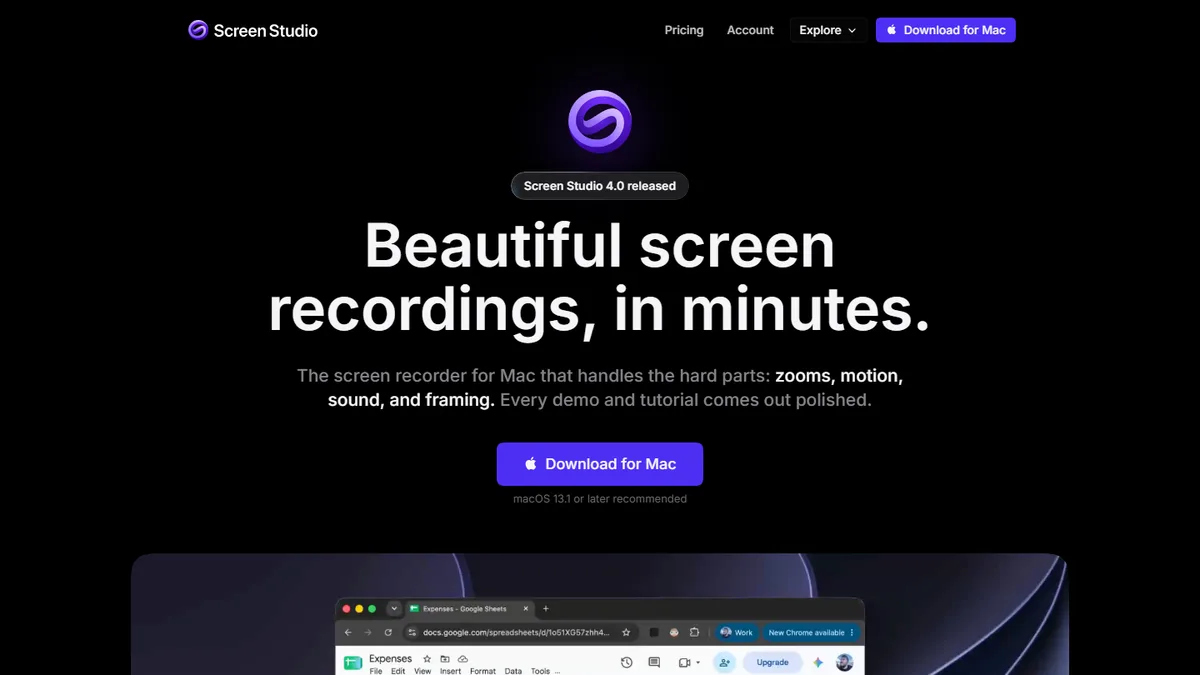
If you’ve seen a crisp, beautifully animated Mac screen recording on Twitter, LinkedIn, or YouTube, it was made with Screen Studio.
Business Model: A high-ticket desktop software product doing millions in revenue.
One Page Website Notes: The entire marketing, feature walkthrough, pricing breakdown, and video demo site is literally one single scrolling page.
Why it works: They don't waste time on an "About Us" page, a blog, or secondary product tabs. They put high-converting MP4 clips right in your face, state the price, and give you one button to buy.
2. Atoms App by James Clear (atoms.jamesclear.com)
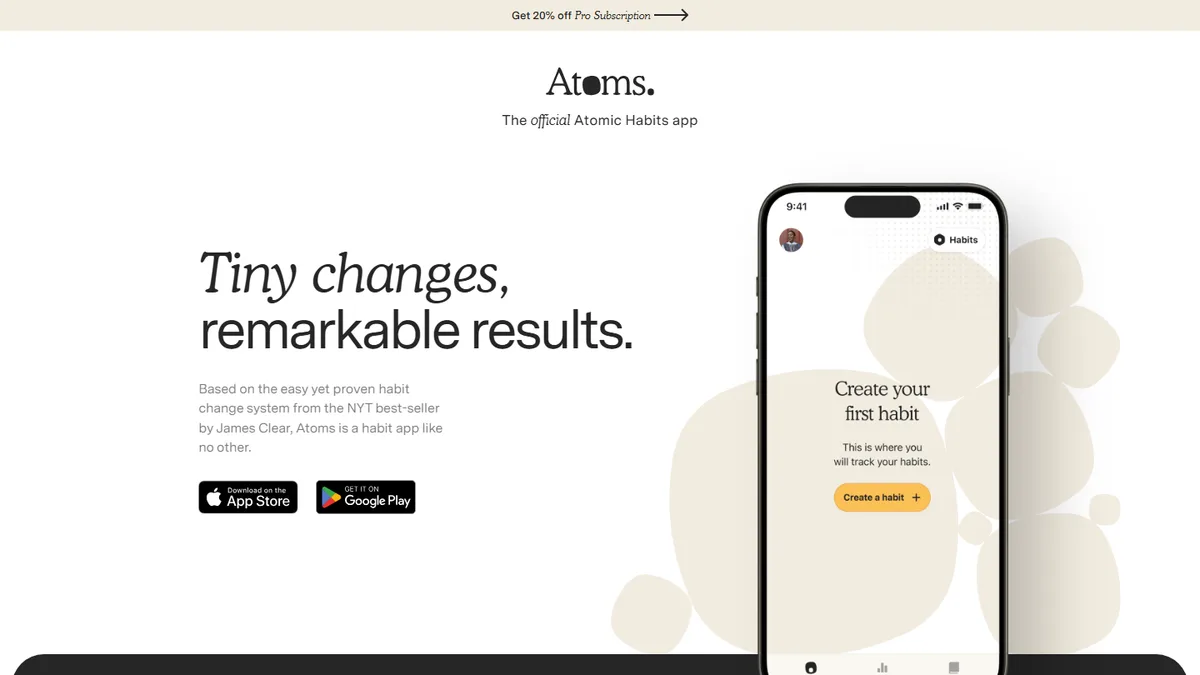
James Clear wrote Atomic Habits (over 20 million copies sold). When he launched Atoms—his official habit-building software app—he didn’t build a 50-page corporate sitemap.
Business Model: High-margin SaaS / Mobile App subscription.
One Page Website Notes: Uses a single, beautifully crafted landing page showcasing the 4 Laws of Habit Formation, user reviews, and instant download buttons.
SEO Catch: James Clear does get massive search traffic for terms like "habit tracker app" or "atomic habits app". But here’s the truth: he isn't doing standard SEO on that page. He already built massive Domain Authority (DA/DR) on his primary blog over a decade, which drives high-equity backlinks straight to the product page.
Core Lesson: Single-page sites convert existing authority like crazy. But if you don't have James Clear's built-in backlink engine, don't expect a one-pager to magically rank #1 for broad organic keywords without paid traffic or direct outreach.
3. CSS Scan (getcssscan.com)
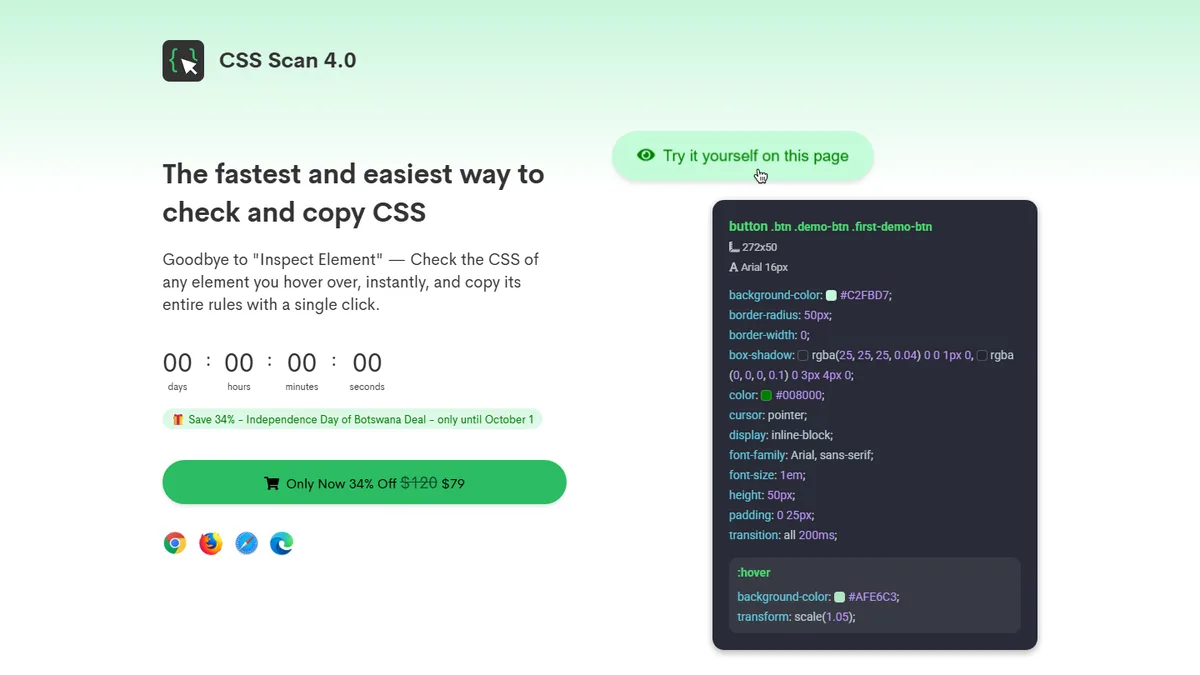
A browser extension for developers built by indie hacker Stef Jus, generating over $100k+ in sales.
Business Model: One-time purchase browser extension.
One Page Website Notes: For years, the entire business—from the interactive hover demo and copy to customer testimonials and the Gumroad buy trigger—ran on a single scrolling page.
Evolution: If you visit it today, you’ll see it has grown into multiple pages for documentation and specific features. But don't miss the lesson: he didn't start with a bloated website. He validated the product, built an audience, and made bank on a single URL before spending a single second building a sitemap.
Need more examples?
Click here and hire me. I’d love to turn you into a successful, one page, multi-million dollar success story.
To One Page, or Not To One Page—That is The Question?
I freaking love manipulating a Shakespeare quote in my favor. Makes all those boring high school English classes finally worthwhile.
Anyway…
You’ll be fine with a one page website if you spend all your time, energy, and budget driving traffic to it. I can recommend some tools for you to use, too, if you want to optimize conversions. But, you’ll have to click here and subscribe.
I tell ya, running my website using AI is insane these days. I can do so much. Basically, any idea I have, AI can create it for me. Maybe humans ARE obsolete? If so, go ask AI for help.
Or—don’t be shy and subscribe, yeah? I’ll teach you everything I know.
Otherwise, if you’re impatient and want my help right now, you’ll have to book a 1-on-1 consult with me.
You cool with that?