
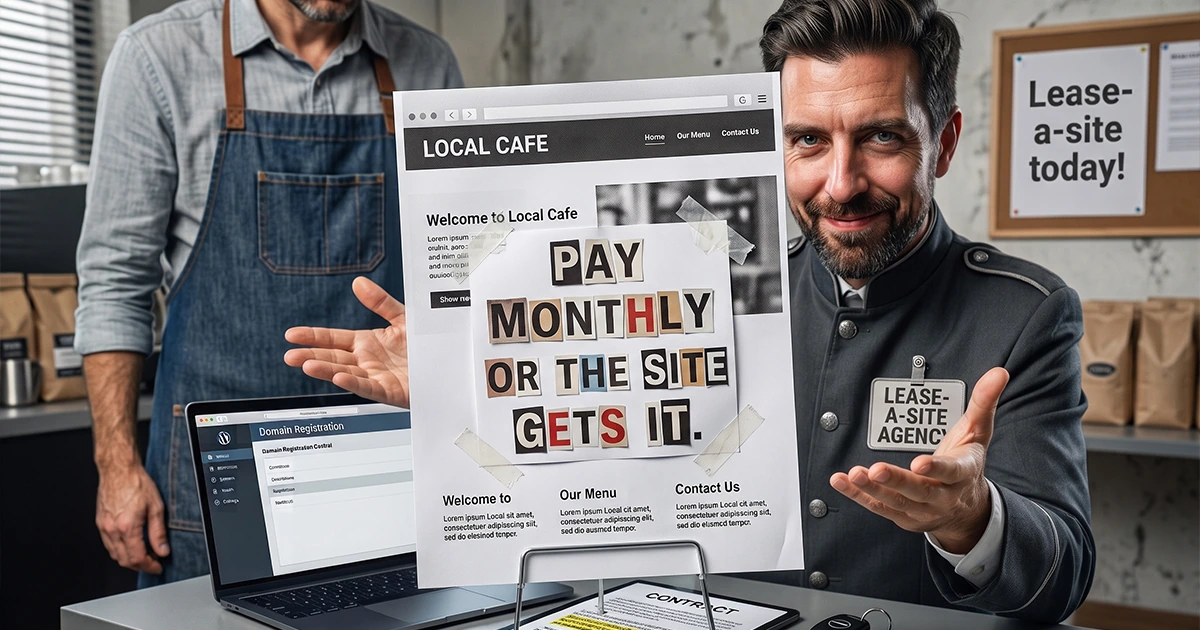
Imagine you’re a cafe owner. One morning, you walk up to your shop only to find the locks changed, the lights off, and a sign on the door saying you can no longer enter.
In the physical world, this only happens if you violate a lease agreement. We all know after missing a few payments, the property owner has every right to shut us out.
But in the digital world? Thousands of business owners experience this exact nightmare simply because they trusted a web design agency a bit too much.
They’re sold the promise of “owning a website.” In reality, they’re just leasing digital space—and they don't even realize how easily they could lose control of their entire online business.
I believe it shouldn't be this way. Every business ought to own their website, one hundred percent. While agencies do need access to your assets to do their job, they should never have absolute control over them.
In this article, I’ll show you exactly how to protect your site, your data, and your investment so no one can ever pull the plug or lock you out.
Digital Ownership 101
Before we look at the specific traps that shitty shady agencies put in their contracts, let me explain what digital ownership actually means.
Think of it as the difference between valet parking and handing over your car title. When you give a valet your keys, you are giving them access to drive and park your car. You are not giving them permission to change the registration to their name, repaint it, or go on a joy ride around the city.
Sadly, too many business owners don’t realize that their “web design agreement” means signing over their digital car titles.
True digital ownership means you control the master accounts, the underlying assets, and the legal rights. The agency or freelancer is just the valet—hired to operate within your ecosystem, not own it.
In the event that a business relationship turns sour with an agency or a freelancer, disputes almost always revolve around these key areas:
- Copyright,
- Domain Ownership,
- and Hosting.
And guess what?
If you don't own these, you don't own your website.
1. Copyright (The Code, Copy, and Creative Design)
Many business owners assume, "I paid for the website, so it belongs to me."
Under intellectual property law, this is a dangerous misconception. By default, the person who writes the lines of code or designs the custom graphics owns the copyright—unless a contract explicitly says otherwise.
However, to be fair, this rule exists for a good reason.
It is how creative freelancers and agencies protect themselves from clients who fail to pay. If a client refuses to clear the final invoice, they don't get to walk away with the asset. In the middle of a project, the agency holds the copyright to ensure everyone honors the deal.
What’s not fair is when a relationship turns toxic after you’ve paid, or when you run into a lease-like agreement you didn't sign up for.
Some agencies use proprietary contracts where they permanently retain the copyright to the layouts, design structures, and code they build—even if you are fully caught up on your bills.
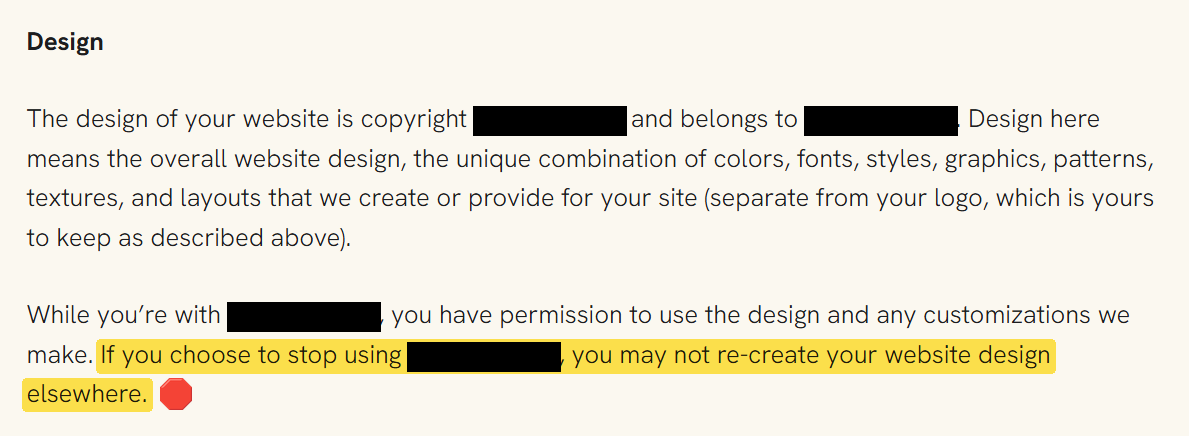
In my opinion, this isn’t web design—it’s a lease agreement.
If you decide to cancel their service, you only get to keep any raw text and images you originally brought to the table. Because they own the design copyright, you aren't legally allowed to pack up the website and move it to a new host.
In other words, ending your relationship with an agency or freelancer means you have to build an entirely new website from scratch.
I would never do that to you.
When I build websites, my clients own everything the second the project is paid in full. Every word, every line of code, and every asset. Every. Thing.
Before you sign the dotted line and pay a deposit, be sure the contract you’re signing includes an explicit "Assignment of Rights" clause.
It should state that all code, design files, and creative assets immediately transfer 100% ownership to you upon final payment. That way, the agency is protected while they work, and you own the asset once the deal is done.
2. Domain Ownership (Your Digital Street Address)
If copyright is the foundation of your house, your domain name (e.g., yourcafe.com) is the street address. It tells the world where you live, handles your customer traffic, and routes your company emails.
This is where our "access vs. control" story starts to get messy.
Agencies and freelancers will often offer to register your domain name for you. They position it as a helpful management service to "save you from the technical hassle."
It sounds great on paper, but let me warn you: this is a trap.
When an agency registers your domain under their account, they legally own your brand's digital identity.
If a billing dispute arises, they don't just have the power to take your website down—they can flip the switch on your entire business. Since they control the domain, they can shut off your incoming emails and completely lock you out of communicating with your own customers.
But the nightmare doesn't end there. If a dispute drags on and bills go unpaid, the agency might simply stop paying the registration fee and let the domain go.
The moment a domain expires, greedy domain squatters and automated bots are ready to snap it up. And once a squatter owns your business name, they will hold it for ransom.
Getting your digital identity back from a squatter won't just be a legal headache—it can easily cost you tens of thousands of dollars to buy it back.
This is why drawing a line between access and control is so critical. An agency only needs access to your domain settings so they can point the address to your website. They never, under any circumstances, need control of the registration account.
I personally use Cloudflare for all my domains (it’s one of the cheapest domain registrars on the internet). I also walk my clients through providing me access, so I can make changes on their behalf without ever owning or controlling their digital asset.
3. Hosting (The Digital Land You Rent)
Fact is, all websites need hosting and all hosting is rented space on a physical server somewhere in the world.
So, in theory, we can’t escape some kind of lease agreement when it comes to owning a website. Unless you’re willing to invest $1000s into building your own server stack.
But, nobody does that.
Instead, we all have to rent digital land. So the billion-dollar question is:
- Whose name is on that lease?
When an agency insists on hosting your website on their private servers or a proprietary "reseller" account, they are the primary tenant. Which means you’re subletting from them.
If a dispute happens, or if you simply get tired of paying a high monthly fee for little to no ROI, they hold the power switch. They can shut off the lights, lock the virtual doors, and refuse to give you a backup copy of your data. You might not even get a copy of your own files.
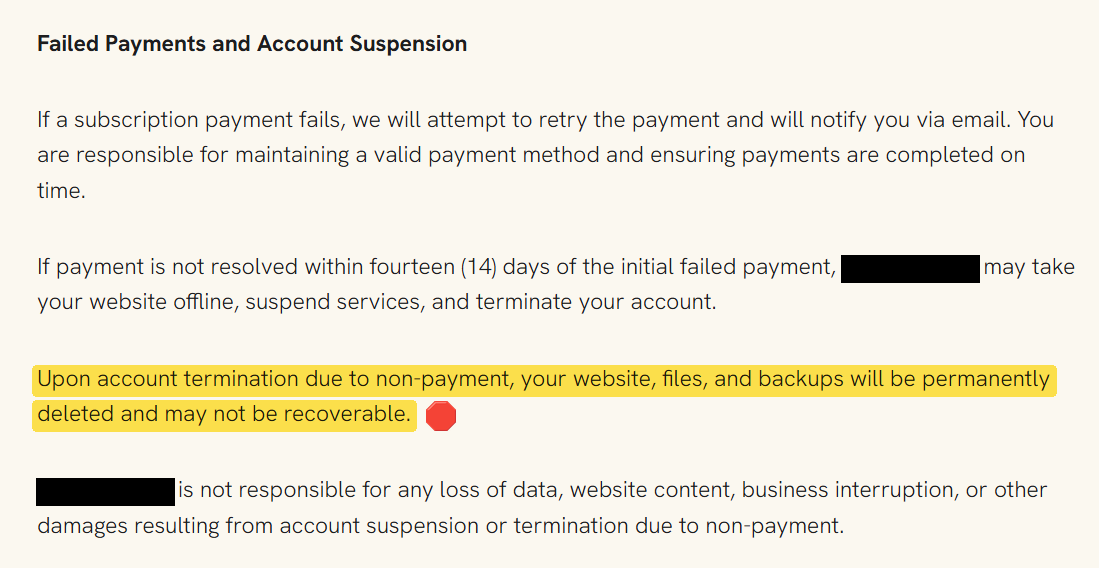
You shouldn't have to worry about waking up to a ransom note just because you wanted to switch web partners.
To keep absolute control over your website's home, follow these strict hosting rules:
- Open the Account Yourself: Always set up your hosting account (e.g., Kinsta, AWS, or Shopify) using your own company email and credit card.
- Delegate, Don't Hand Over: Grant the agency developer or admin access to your hosting dashboard. They get the keys to build, but you retain the power to revoke their access at any time.
- Automate External Backups: Ensure daily off-site backups are automatically sent to a cloud storage account you control (like Google Drive or Dropbox). Even if everything goes wrong, you still have a copy of your site ready to restore elsewhere.
Remember, when you sublet your hosting from an agency, you’re setting yourself up for a potential digital hostage situation. If the agency vanishes or goes out of business, your site goes down with them.
Keep Reading: What Happens If Your Web Designer Dies?
Your Website, Your Asset
A website is an investment, not a rental agreement.
Agencies are meant to build and maintain your digital storefront—not own it. Take a look at your accounts today, check who owns the login details, and make sure the master keys are safely in your own pocket.
If you ever need an honest second opinion before agreeing to a web design project, I’m always here to help you.
Letters from a Copywriter
The Cloudflare domain guide isn’t written yet.
I’m writing a full walkthrough of how I register and manage every domain on Cloudflare. When 10 people sign up, I’ll force myself to finish it — and email it straight to you.